


Quantum computing—this transformative technology is breaking into the mainstream. Quantum computers are set to revolutionize encryption, material science, environmental science, pharmaceuticals, and the list goes on. I’ve started to get my head around how you code for quantum computers, as of course it is a very different type of computer to write software for.
From Bits to Qubits: The Quantum Leap
At the heart of every classical computer lies the bit, the fundamental unit of information that exists in one of two states: 0 or 1. Think of it as a light switch that's either off or on. This binary system has powered our digital world for decades.
Enter the qubit (quantum bit), the basic unit of quantum information. Unlike bits, qubits harness the quantum phenomenon of superposition, allowing them to exist in multiple states simultaneously. Imagine a sphere: while a bit can only be at the North Pole (0) or South Pole (1), a qubit can be anywhere on the sphere's surface. This property exponentially increases the computational power of quantum computers, enabling them to process vast amounts of possibilities at once.
The Enigma of Entanglement

One of the most fascinating aspects of quantum mechanics is entanglement. This phenomenon occurs when pairs or groups of qubits become interconnected such that the state of one qubit instantaneously influences the state of another, regardless of the distance separating them. Einstein famously referred to this as "spooky action at a distance."
In quantum computing, entanglement is a powerful resource. It allows for complex correlations between qubits, facilitating computations that are infeasible for classical computers. Entangled qubits can perform intricate operations, enabling quantum algorithms to solve certain problems more efficiently than their classical counterparts.
Quantum Computing vs. Classical Computing: Cracking Encryption
To appreciate the sheer power of quantum computing, let's consider an example involving encryption—a cornerstone of modern cybersecurity.
Classical Computers and RSA Encryption
RSA encryption is one of the most widely used cryptographic systems for securing data transmission. It relies on the mathematical challenge of factoring large numbers into their prime components. The security of RSA stems from the fact that, while it's easy to multiply two large prime numbers together, it's incredibly difficult to reverse the process—factoring the product back into its prime factors.
For example, suppose we have a number that's the product of two large primes:
Public Key (n): A large number resulting from multiplying two prime numbers (e.g., a 2048-bit number).
Private Key: The two prime factors used to create n.
A classical computer would need an impractical amount of time—possibly billions of years—to factor such a large number using the best-known algorithms like the General Number Field Sieve.
Quantum Computers and Shor's Algorithm
Enter Shor's Algorithm, a quantum algorithm devised by mathematician Peter Shor in 1994. Shor's Algorithm can factor large numbers exponentially faster than the best classical algorithms.
Here's how quantum computers make this possible:
Quantum Parallelism: Thanks to superposition, a quantum computer can evaluate many possible factors simultaneously.
Quantum Fourier Transform: Shor's Algorithm uses the Quantum Fourier Transform to find the periodicity in functions related to the number being factored, which is a key step in determining its prime factors.
Exponential Speedup: While classical algorithms require time that grows exponentially with the number of digits in the number, Shor's Algorithm requires time that grows polynomially.
For instance, a quantum computer with a sufficient number of qubits could factor a 2048-bit RSA modulus in a matter of hours or even minutes, effectively breaking the encryption.
Why Quantum is So Much Faster
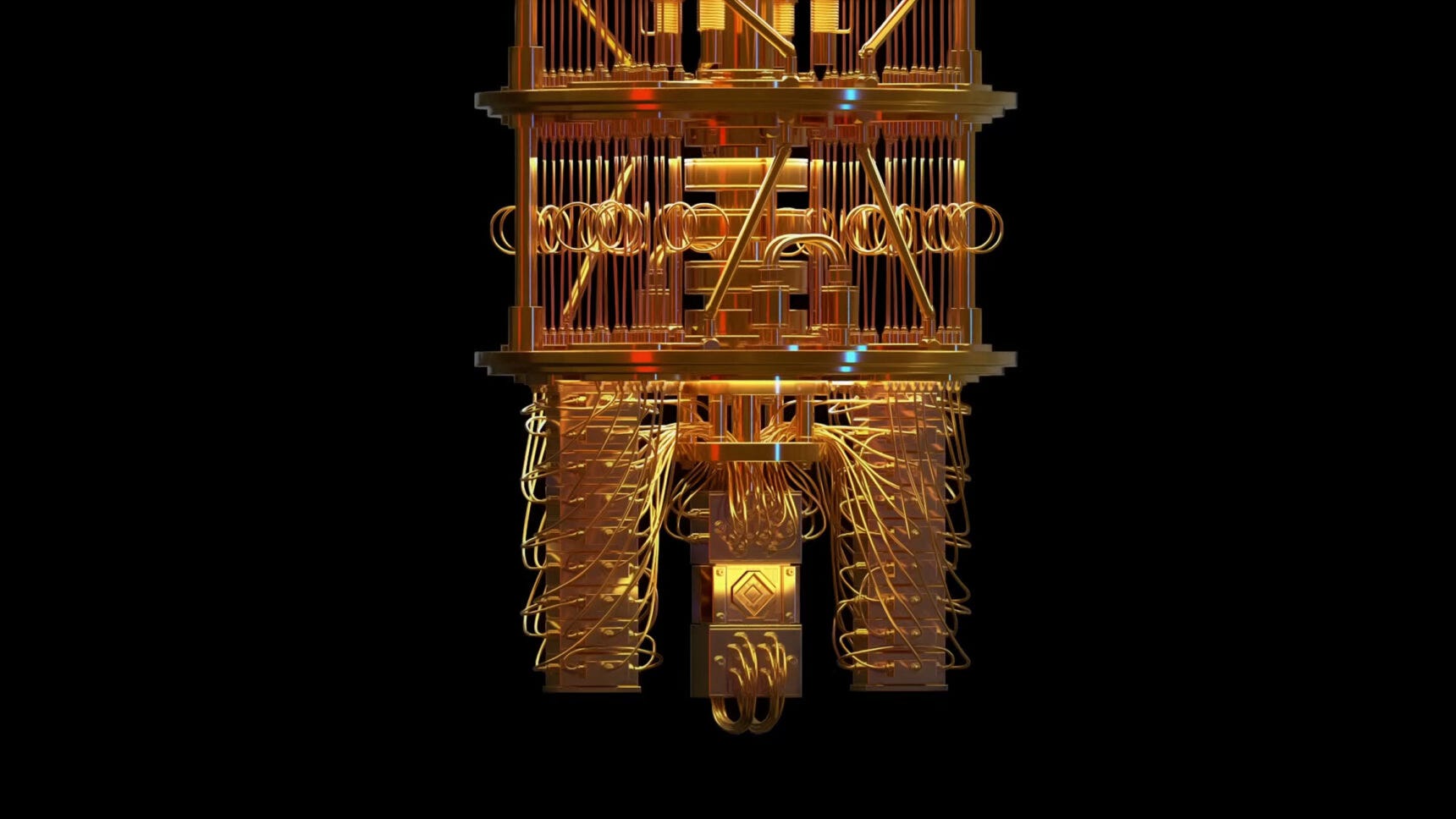
The drastic speed difference arises from quantum computers' ability to process and analyze vast amounts of data simultaneously:
Superposition: Qubits can represent all possible states at once. A system with n qubits can represent (2^n) states simultaneously.
Entanglement and Interference: These phenomena allow quantum computers to perform complex calculations that amplify correct solutions and diminish incorrect ones.
Quantum Algorithms: Specialized algorithms like Shor's leverage these properties to solve specific problems much more efficiently than classical algorithms.
This capability isn't just a theoretical exercise—it's a profound shift that poses both incredible opportunities and significant challenges, especially in the realm of cybersecurity.
The Implications for Cryptography
The potential of quantum computers to break widely used encryption schemes has spurred the development of post-quantum cryptography. These are cryptographic algorithms believed to be secure against quantum attacks, ensuring that data remains protected even in a future where quantum computers are prevalent.
Governments and organizations worldwide are investing in researching and standardizing these new cryptographic methods. It's a race to upgrade our security infrastructure before quantum computers become capable of rendering current encryption obsolete.
Languages of the Quantum Realm
Programming quantum computers requires a shift in thinking and the adoption of specialized programming languages and frameworks. Here's a glimpse into the languages shaping the quantum computing landscape today:
Twist
Developed by researchers at MIT, Twist is an innovative quantum programming language designed to make quantum programming safer and more accessible. Twist introduces the concept of purity in quantum programs, allowing developers to explicitly state when a qubit must not be entangled with others. By providing tools to reason about entanglement, Twist helps programmers avoid unintended quantum effects and write more reliable quantum code.
Qiskit
Developed by IBM, Qiskit is an open-source framework that leverages Python to create and run quantum algorithms. Designed to work with IBM's quantum processors, it provides tools to simulate and execute quantum circuits.
Cirq
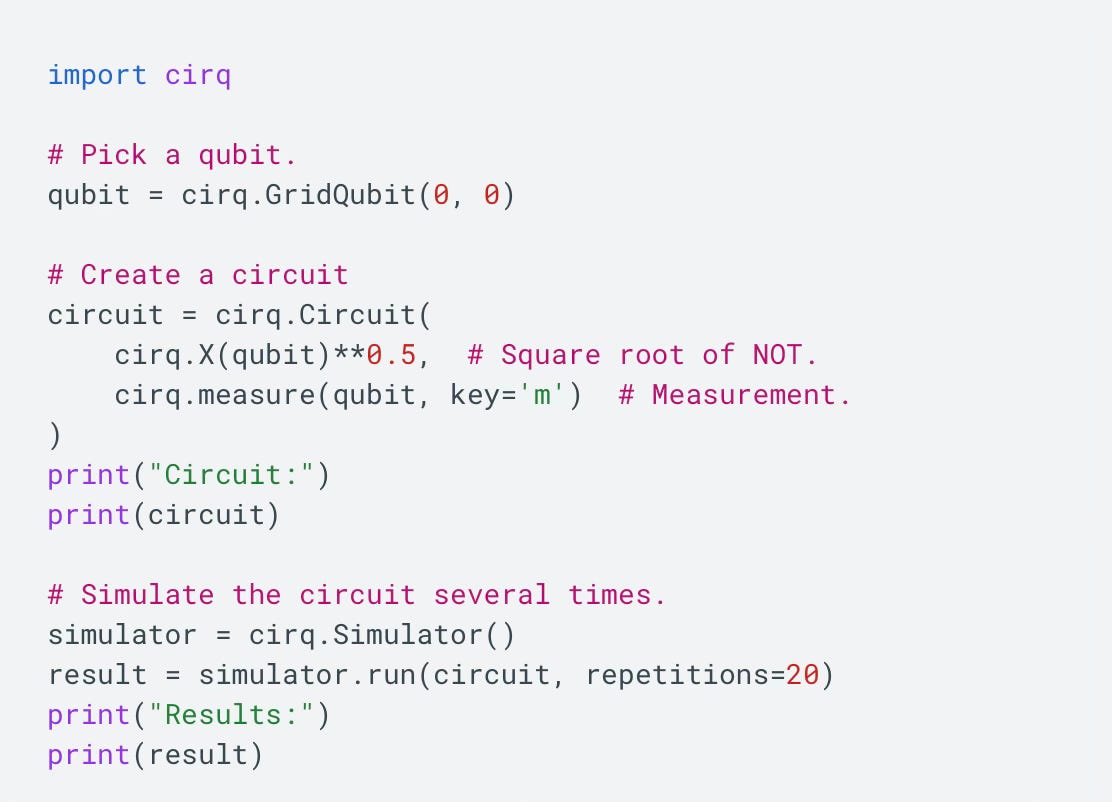
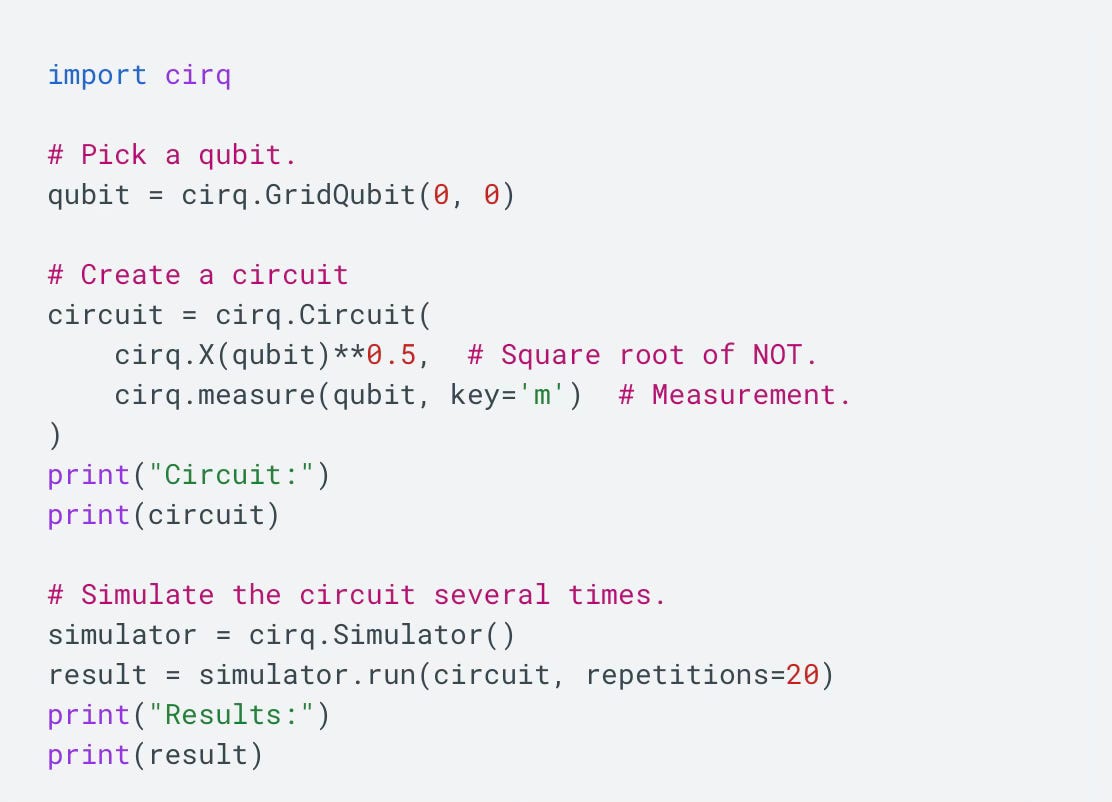
Cirq is Google's answer to quantum programming. This Python library focuses on writing, manipulating, and optimizing quantum circuits for NISQ (Noisy Intermediate-Scale Quantum) computers, bridging the gap between research and application.
Q# (Q-sharp)
Microsoft's Q# is a domain-specific language crafted for quantum algorithm development. Integrated with Visual Studio and Visual Studio Code, Q# offers a suite of libraries for quantum computation and provides seamless simulation capabilities.
Forest and PyQuil
Rigetti Computing's Forest SDK includes PyQuil, a Python library for quantum programming using Quil (Quantum Instruction Language). PyQuil allows developers to write quantum programs and run them on Rigetti's quantum processors or simulators.
Strawberry Fields
Catering to continuous-variable quantum computing, Strawberry Fields by Xanadu is a full-stack Python library for designing and simulating quantum optical circuits.
Getting Started with Quantum Programming
Venturing into quantum programming might seem daunting, but with the right approach, it becomes an exciting challenge:
Build a Strong Foundation: Begin by strengthening your understanding of quantum mechanics principles—superposition, entanglement, and quantum interference. Numerous online courses and tutorials can aid in grasping these concepts.
Explore Innovative Languages: Consider trying out languages like Twist to gain deeper insights into quantum programming. Twist's emphasis on managing entanglement can provide valuable experience in writing safer and more efficient quantum code.
Choose Your Toolkit: Select a quantum programming language that aligns with your background. If you're familiar with Python, Qiskit and Cirq are excellent starting points. For those inclined toward Microsoft's ecosystem, Q# is the way to go.
Hands-On Practice: Dive into coding by experimenting with quantum circuits and algorithms. Utilize simulators provided by these frameworks before tapping into actual quantum hardware.
Leverage Online Resources: Explore documentation, attend webinars, and participate in quantum computing communities. Platforms like Stack Exchange, GitHub, and dedicated forums are invaluable for learning and troubleshooting.
Stay Curious and Updated: Quantum computing is a rapidly evolving field. Keep abreast of the latest research, breakthroughs, and updates to quantum development kits.
Why Quantum Computing Matters
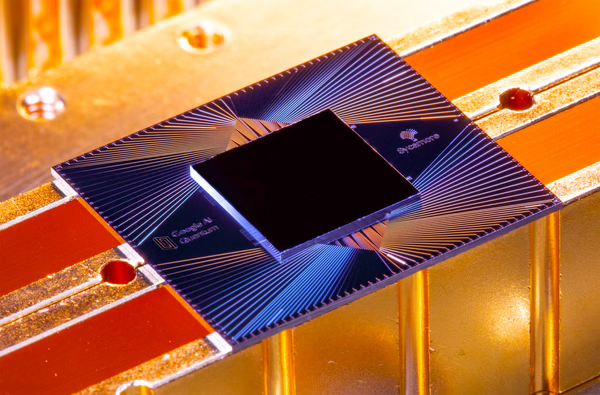
Quantum computers hold the promise of solving complex problems that are currently intractable for classical computers. They're poised to revolutionize fields like cryptography, material science, pharmaceuticals, and optimization challenges.
However, the potential to break current encryption methods also presents significant cybersecurity concerns. This duality emphasizes the importance of understanding quantum computing—not only to leverage its strengths but also to mitigate its risks.
By comprehending how quantum computers can crack encryption and utilizing tools like MIT's Twist, we can better prepare for a future where quantum-resistant cryptographic algorithms protect our digital infrastructure.
Embracing the Quantum Future
The shift from bits to qubits represents more than just a technological upgrade—it's a paradigm shift in how we process information. By embracing the nuances of quantum programming languages and the underlying principles of quantum mechanics, we're taking steps toward a world with many possibilities.